
A one-second delay in page load time can cost a conversion-focused store several percentage points in conversion rate. That's not a marketing claim — it's a pattern that shows up consistently across eCommerce analytics, and it's exactly why page speed has quietly become one of the highest-leverage things a growing online store can fix.
Next.js commerce — server-rendered, highly cacheable, and built for speed by default — is how a lot of serious eCommerce brands are closing that gap. Here's how it actually works, and what kind of speed and sales improvement is realistic.
Why Speed Is a Sales Problem, Not Just a Technical One
Every extra second of load time increases the chance a visitor leaves before they even see your product. On mobile — where most Indian shopping traffic happens — slow connections make this worse, and every added app, tracking script, or theme plugin on a standard store compounds the delay.
The sales impact shows up in a few specific places:
- Higher bounce rate on product and category pages that load slowly
- Lower add-to-cart rate because visitors get impatient before they finish browsing
- Checkout abandonment when the payment page itself lags
- Worse ad performance because slow landing pages hurt Quality Score and raise your cost per click
Why Next.js Specifically Moves the Needle
Server-side rendering and static generation. Next.js can pre-render product and category pages, so the browser gets a fully-formed page almost instantly instead of waiting for JavaScript to build the page client-side — a common bottleneck on heavier theme-based stores.
Granular caching. Pages, API routes, and even individual data fetches can be cached at the edge, meaning repeat visitors (and even first-time visitors hitting popular pages) get near-instant loads.
No theme or app bloat. A standard store accumulates JavaScript from every app you install — reviews widgets, upsell popups, loyalty programs, live chat. Each one adds load time. A custom Next.js build only ships the JavaScript your store actually needs.
Image optimization built in. Product photography is usually the heaviest asset on any eCommerce page. Next.js's image handling automatically serves correctly-sized, modern-format images per device, which is often the single biggest real-world speed win on a product-heavy store.
How Much Faster, Realistically?
Numbers vary by store, but it's common to see Largest Contentful Paint (the metric most closely tied to perceived load speed) improve by 50% or more when moving from a heavily app-stacked theme store to a clean, purpose-built Next.js front end. On high-traffic, ad-driven stores, that kind of improvement routinely shows up as a measurable lift in conversion rate within the first few weeks — not because anything about the product changed, just because fewer visitors bounced before seeing it.
This Doesn't Mean Abandoning Shopify Entirely
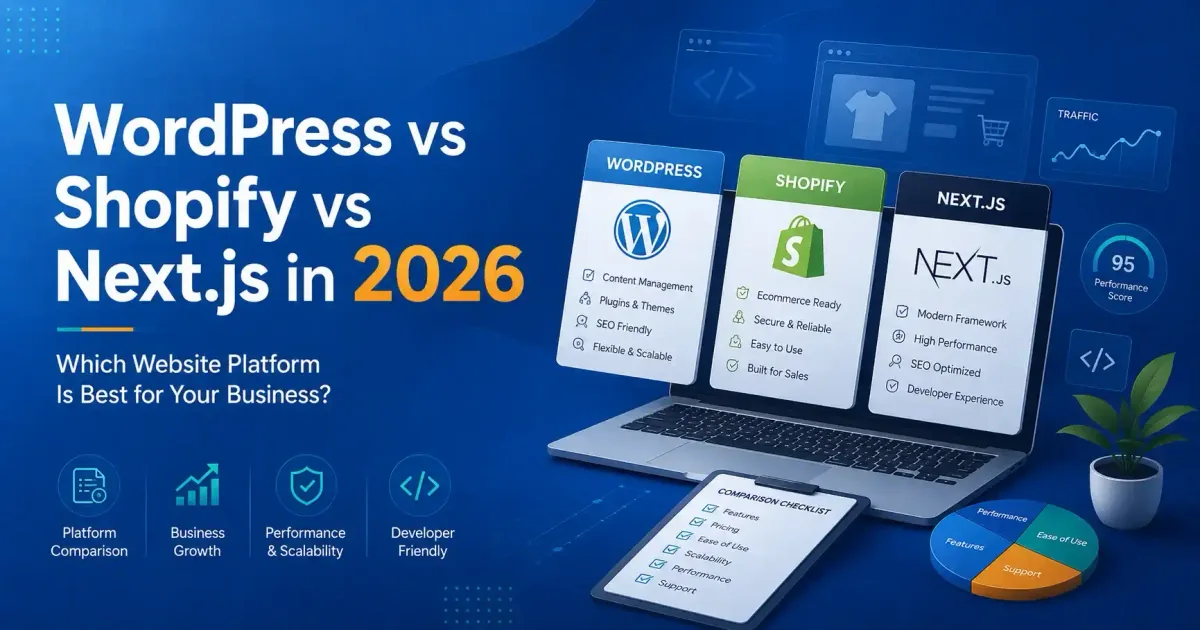
A common misconception is that "going Next.js" means leaving your existing commerce platform behind completely. It doesn't have to. Headless commerce — using Shopify (or another platform) purely as the backend for inventory, orders, and checkout, with a custom Next.js front end — lets you keep the commerce engine you already trust while getting the performance benefits of a fully custom storefront. We cover this trade-off in more depth in our comparison of Shopify vs custom Next.js eCommerce.
Is This Right for Your Store?
Next.js commerce makes the most sense once you're already running meaningful traffic and a slow store is visibly costing you sales — particularly if you're spending on paid ads and feeling the pinch of a low Quality Score. If you're just launching and validating a new product, a standard theme-based store is still the faster, cheaper way to get started; you can always migrate once the volume justifies it.
And speed isn't the only lever for ranking and visibility — framework choice also directly affects your SEO fundamentals, which we break down in why Next.js is the ultimate framework for SEO-friendly websites.
Build a Store That Doesn't Lose Sales to Load Time
We build custom, high-performance eCommerce platforms on Next.js for brands that have outgrown what a standard theme can deliver. If your store's speed is costing you conversions and you want a clear, honest read on whether a custom build is worth it yet, get in touch.