Most underperforming Shopify stores we get asked to audit aren't failing because of the product, the pricing, or even the traffic. They're failing because of a handful of setup mistakes made in the first week — before the brand even ran its first ad — that quietly cap conversion rate for months before anyone notices.
Here are the five we see most often in Indian D2C stores, and exactly how to fix each one.
Mistake 1: Only Offering Prepaid (or Only COD)
COD still drives a meaningful share of first-time orders in India, especially for new or unfamiliar brands customers haven't bought from before. Stores that launch prepaid-only lose a real chunk of first-time buyers who simply aren't ready to pay upfront for a brand they don't yet trust.
The opposite mistake — offering COD everywhere, with no restrictions — creates a different problem: high RTO (return to origin) rates on low-trust pin codes, which quietly eats margin on every failed delivery attempt.
The fix: offer both, but apply smart COD rules — pin-code-based eligibility, a COD convenience fee past a certain order value, or COD verification via a confirmation call/WhatsApp message for first-time high-value orders. We cover the technical setup for this in our Razorpay and Shiprocket Shopify integration guide.
Mistake 2: A Generic, Unoptimized Checkout
Shopify's default checkout is solid, but brands often leave it exactly as installed — no custom trust badges near the payment button, no clear delivery-estimate messaging, no visible return policy at the point of payment. Each of these is a small hesitation point that adds up to meaningful cart abandonment.
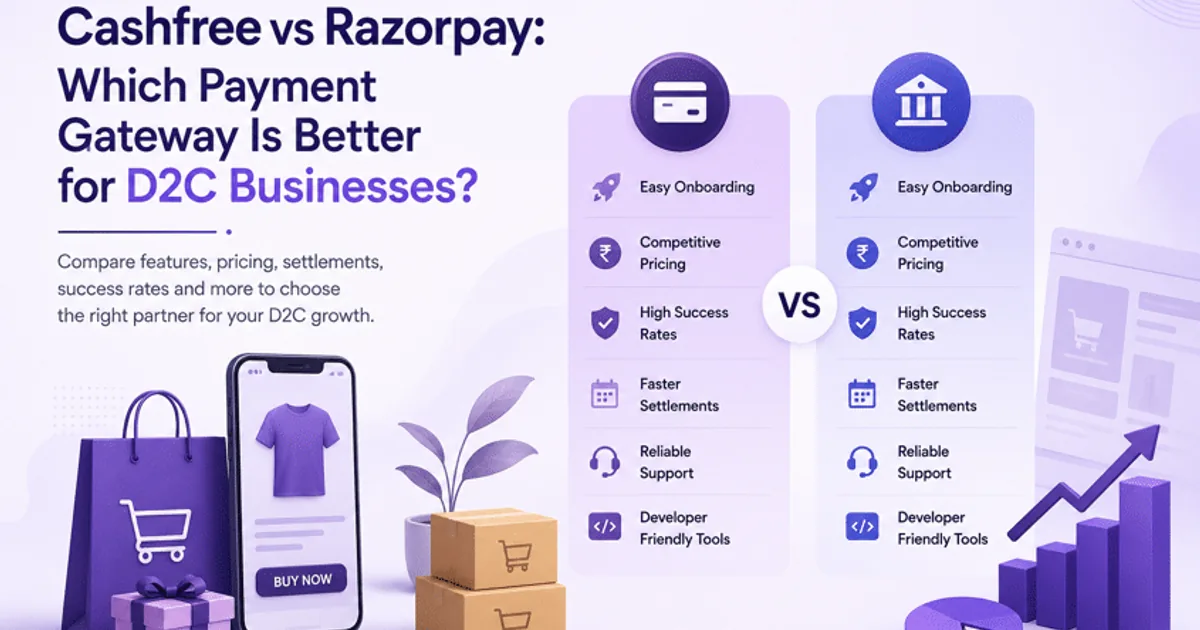
The fix: add visible trust signals (secure payment icons, return policy, delivery timeline) directly on the checkout page, and make sure your payment gateway's method coverage actually matches what your customers prefer to use. Our comparison of Indian payment gateways is a good starting point if you're not confident your current setup is optimal.
Mistake 3: No Abandoned Cart Recovery Flow
This is the single most common gap we find. Shopify has built-in abandoned cart email support, but most new stores never configure it — meaning a visitor who adds to cart and leaves simply disappears, with zero follow-up. Industry data consistently shows abandoned cart emails recovering a meaningful share of otherwise-lost revenue, essentially for free once set up.
The fix: configure a 2–3 email abandoned cart sequence (first nudge within an hour, a reminder with urgency within a day, and a final incentive if needed), and extend it to WhatsApp if your audience responds better there than to email — which is true for most Indian D2C audiences.
Mistake 4: Slow Page Speed From App Overload
Every app installed on a Shopify store — reviews, upsells, loyalty, chat widgets, announcement bars — adds JavaScript that slows the page down. New stores often install five or six apps in the first month chasing every feature they've seen on a competitor's site, without ever checking the cumulative speed cost.
The fix: audit your installed apps quarterly and remove anything not actively driving measurable value. If you've outgrown what a standard theme can deliver speed-wise even with a clean app stack, it may be worth exploring how Next.js commerce can meaningfully improve your store's load speed.
Mistake 5: No Shipping Serviceability Check Before Running Ads
New brands frequently run paid ads nationally before confirming their courier partners can actually deliver reliably to every region they're targeting. The result: orders from poorly-serviced pin codes convert into refund requests and 1-star reviews, not repeat customers.
The fix: check courier serviceability for your core shipping zones before scaling ad spend geographically, and consider restricting checkout to well-serviced pin codes until you've validated delivery reliability in new regions.
The Pattern Behind All Five
Every one of these mistakes comes from treating Shopify setup as a one-time task instead of an ongoing optimization process. The stores that perform best aren't necessarily the ones with the biggest budgets — they're the ones that actually revisit checkout, shipping, and app performance regularly instead of setting it up once and moving on.
Get Your Shopify Store Set Up Right
We set up and optimize Shopify stores for Indian D2C brands — payments, shipping, abandoned cart flows, and performance, done properly from day one. If your store feels like it's underperforming and you're not sure why, let's audit it together.