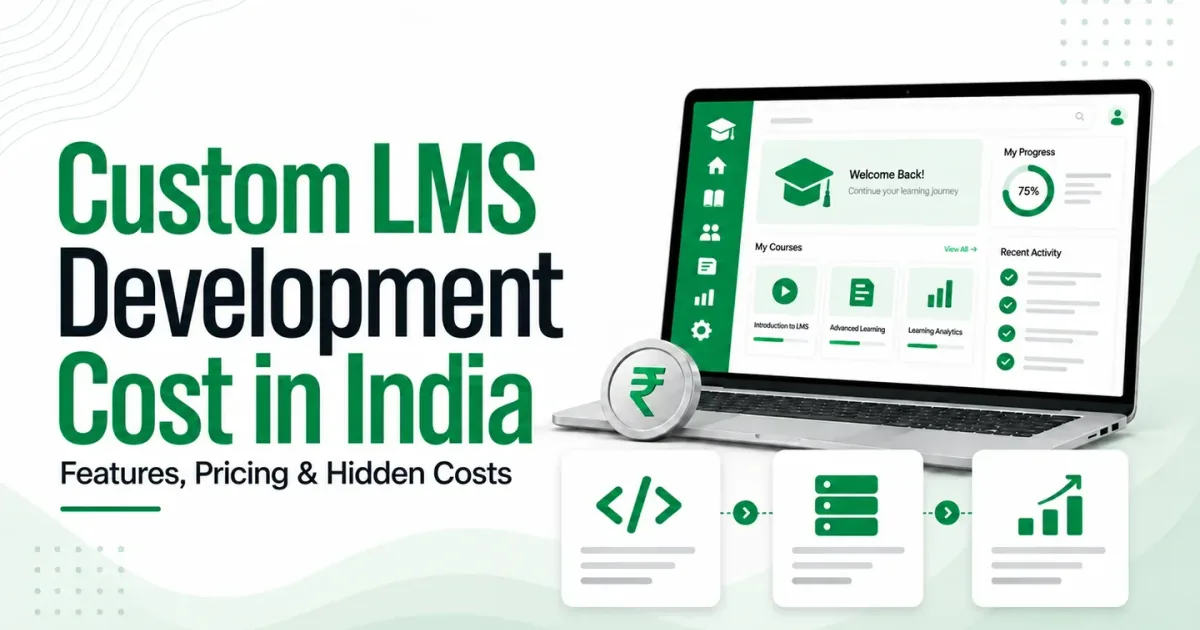
A coaching institute in Mukherjee Nagar, a CBSE school in Dwarka and a skills academy in Noida all ask the same question when they go online: do we buy a readymade LMS, or build our own portal?
Both are legitimate. We've seen institutes thrive on a ₹15,000-a-month LMS and others burn a year trying to bend one into shape. The right answer depends on what you teach, how you make money and how much control you need over the student experience.
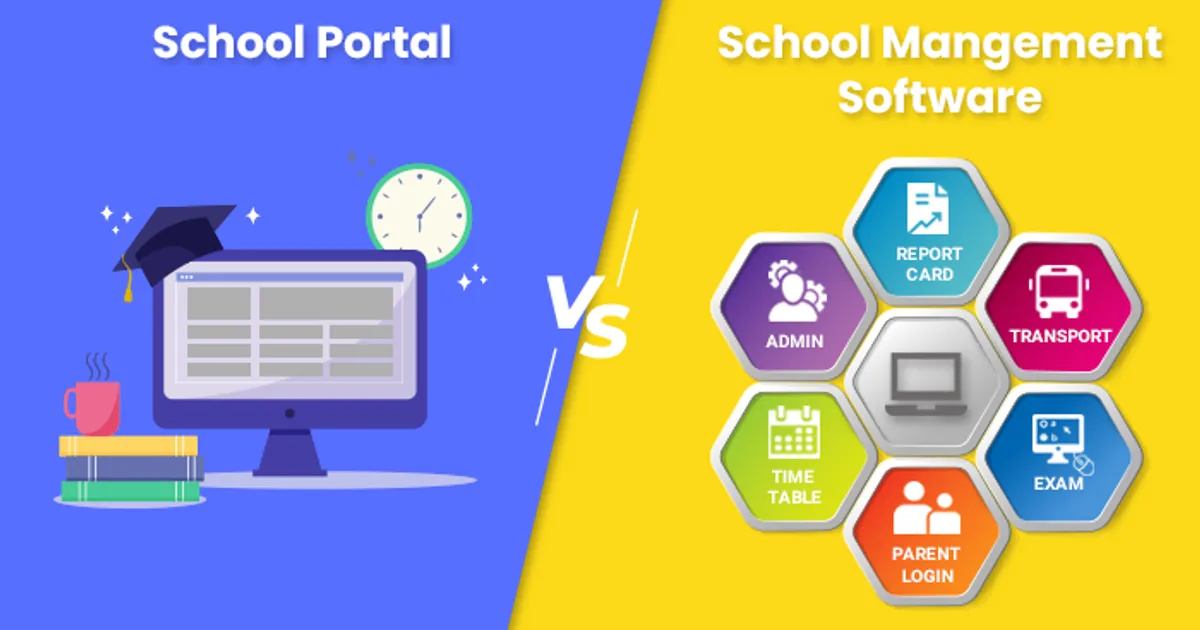
We covered a similar decision for schools in our school management software guide. This one focuses on training institutes, coaching centres and EdTech businesses.
What "Readymade LMS" Covers
There are three broad groups:
- Open-source LMS such as Moodle. Free software, but you host, customise and maintain it.
- SaaS course platforms such as Teachable, Thinkific or Indian equivalents. Monthly fee, quick setup, limited customisation.
- School and campus suites that bundle attendance, fees, exams and parent apps.
They're fast to start and have been tested by thousands of users. The trade-off is that you work within their model of how teaching happens.
Where a Readymade LMS Wins
- Speed. You can be live in days, not months.
- Low upfront cost. Often a monthly fee, no development bill.
- Maintenance handled by the vendor: updates, hosting, security patches.
- Proven basics. Course pages, quizzes, certificates, video hosting, student accounts.
If you're testing a new course, running a small cohort or selling a few recorded programmes, start here. Don't build what you can rent while you're still proving demand.
Where It Starts to Hurt
- Pricing grows with you. Many platforms charge per student or take a transaction cut. At 5,000 students, that bill gets large.
- Branding and experience. Your students see someone else's interface. For a premium coaching brand, that matters.
- Indian workflows don't fit. Fee instalments with GST invoices, UPI autopay, parent logins, regional languages, offline-plus-online batches and Hindi medium content are often handled badly.
- Exam logic is rigid. Negative marking, section-wise timers, All India rank lists and rank-by-batch need specific behaviour.
- Data lives with the vendor. Exporting student progress for analysis or moving to another tool can be painful.
- Content piracy. Recorded lectures leak on Telegram. Basic platforms offer limited protection.
Decision Table
| Your situation | Likely choice |
|---|---|
| Under 500 students, few courses, validating the idea | Readymade SaaS |
| School needing attendance, fees, parent app | School ERP suite or custom, see our school guide |
| Coaching with test series, ranks, batches, instalment fees | Custom or heavily customised |
| EdTech startup where the platform is the product | Custom, always |
| 3,000+ students and rising platform bills | Custom starts to pay back |
| Need your own mobile app and brand | Custom, or white-label with limits |
What Custom Gets You
A custom portal is built around how you teach and earn:
- Your brand throughout, including a mobile app on the Play Store and App Store
- Test engine tuned to your exams: negative marking, adaptive sections, detailed analytics per topic
- Fee logic: instalments, scholarships, family discounts, GST invoices, Razorpay or Cashfree autopay, reminders by WhatsApp
- Batch and teacher management that mirrors your timetable
- Parent dashboards with attendance and progress
- Integrated live classes: Zoom, Google Meet or a video API, with attendance captured automatically
- Content protection: expiring video links, watermarking, device limits
- Full data ownership and your choice of hosting
One Piece of Real Engineering: Protecting Paid Videos
Piracy is the first thing coaching owners ask about. No system is leak-proof, since someone can always film a screen. But expiring, user-bound links stop casual sharing. Here's a signed URL generator in Next.js:
// lib/video-url.ts
import crypto from "node:crypto";

const SECRET = process.env.VIDEO_SIGNING_SECRET!;

export function signVideoUrl(videoId: string, userId: string, ttlSeconds = 600) {
  const expires = Math.floor(Date.now() / 1000) + ttlSeconds;
  const payload = `${videoId}:${userId}:${expires}`;
  const sig = crypto.createHmac("sha256", SECRET).update(payload).digest("hex");
  return `/api/video/${videoId}?u=${userId}&e=${expires}&s=${sig}`;
}

export function verifyVideoUrl(videoId: string, userId: string, expires: number, sig: string) {
  if (expires < Math.floor(Date.now() / 1000)) return false;
  const expected = crypto
    .createHmac("sha256", SECRET)
    .update(`${videoId}:${userId}:${expires}`)
    .digest("hex");
  return (
    sig.length === expected.length &&
    crypto.timingSafeEqual(Buffer.from(sig), Buffer.from(expected))
  );
}
The /api/video/[id] route checks that signature, confirms the student is enrolled and pays for the course, then streams the file. A link copied to a friend dies in ten minutes and belongs to one account. For stronger protection, combine this with a video host that supports encrypted streaming and on-screen watermarks showing the student's phone number, which discourages sharing more than any technical lock.
What It Costs
Typical Delhi NCR ranges for 2026:
| Option | Upfront | Ongoing |
|---|---|---|
| Readymade SaaS LMS | Nil to ₹30,000 setup | ₹3,000 to ₹50,000 a month, often rising with students |
| Customised Moodle | ₹1,00,000 to ₹4,00,000 | Hosting plus maintenance |
| Custom web portal: courses, tests, fees, batches | ₹4,00,000 to ₹12,00,000 | ₹10,000 to ₹40,000 a month |
| Custom portal plus Android and iOS apps | ₹8,00,000 to ₹20,00,000 | ₹20,000 to ₹60,000 a month |
Break-even depends on student count. If you pay a platform ₹40,000 a month and expect that to grow, a custom build can pay for itself in two to three years. And you keep an asset, which matters if you plan to raise money or sell.
A Middle Path Many Institutes Use
You don't have to choose all-or-nothing. A common route:
- Start on a readymade LMS to validate courses and collect real student feedback.
- Keep a clean export of student, course and payment data from day one.
- Build a custom layer once volume justifies it: your own app, test engine and fee system, migrating course by course.
This limits risk and means you know exactly which features to build, because you've lived with the gaps.
Mistakes to Avoid
- Building a custom system before you've sold a single course
- Choosing a platform on the sales demo, without a pilot with real students
- Forgetting the mobile experience. Most of your students are on phones, often on weak connections, so offer lower-quality video options and downloads where allowed.
- Ignoring support. Students will message at 10 pm before a test, so plan for it.
- Not checking exit terms: data export, contract length, and what happens to your content
What To Do Next
Count your students and your monthly platform bill, and list the three things your current setup can't do. If the list is short and the bill is small, stay where you are. If the list keeps growing, you've reached the point where custom starts to make sense.
INDOTREX builds custom software and mobile apps for institutes, coaching centres and EdTech startups across Delhi NCR. Share your current setup and student numbers, and we'll give you an honest view on rent, customise or build. Contact us.