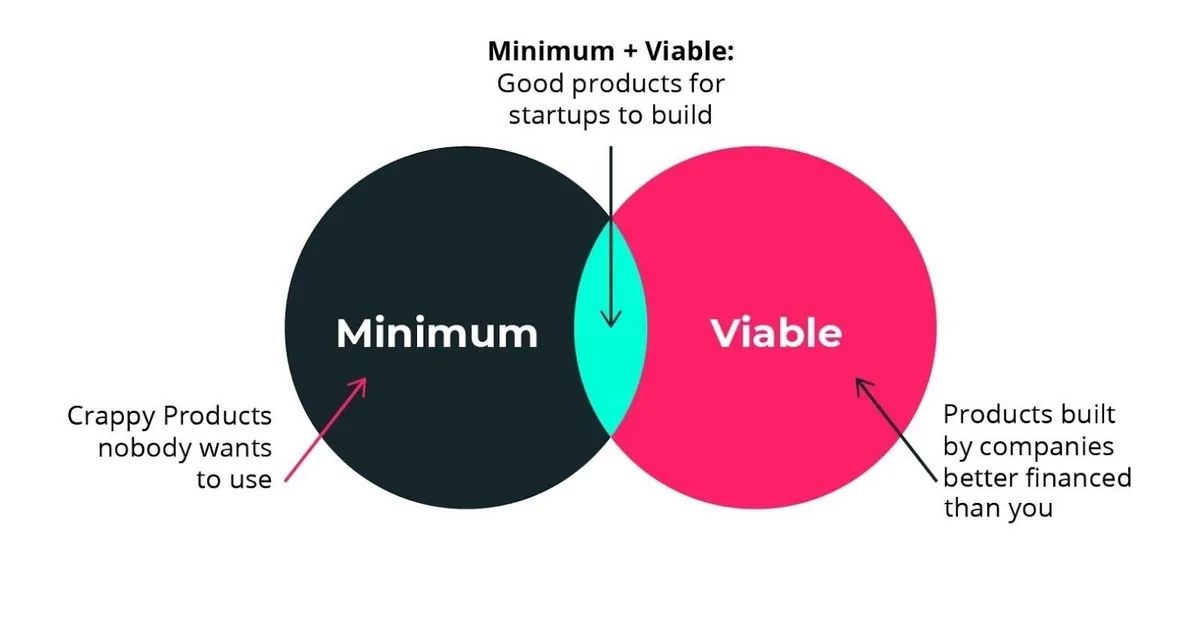

Most website redesigns are started for the wrong reason ("it looks old") and fail for the right one: the team forgot the rankings and leads the old site was quietly earning. A redesign should make the business better, not just the homepage newer.
This guide to website redesigning services in Delhi NCR covers when a redesign is worth it, what the process looks like, what it costs in Delhi NCR, and how to avoid the SEO mistakes that undo months of work.
Redesign, Refresh or Rebuild?
These three get mixed up, and they cost very differently.
| Approach | What changes | When it fits |
|---|---|---|
| Refresh | Visual polish, content updates, fixes | Structure is sound, design feels dated |
| Redesign | New layout, UX, content structure, possibly new CMS | Site isn't converting or can't support your business |
| Rebuild | New platform and architecture | Technical limits, security risk, or heavy performance problems |
If your site is slow because of its platform, repainting it won't help. If your site is fine technically but poorly structured, a rebuild is overkill.
Signs You Actually Need a Redesign
- Visitors arrive but don't enquire, call or buy
- The site is hard to use on a phone
- Pages load slowly even after basic optimisation
- Your team can't update content without a developer
- The design doesn't reflect what the business has become
- You've added pages and plugins over the years, and nobody knows what's safe to remove
- Security warnings, outdated software or hacked pages
If none of these apply, spend the money on content and speed instead.
The Process We Follow
1. Audit what you already have
Before designing anything, review analytics and search data. Which pages bring traffic? Which generate enquiries? Which keywords do you already rank for? This is the step most redesigns skip, and the reason many lose traffic.
2. Decide what to keep, merge or remove
Go through every URL and label it:
- Keep: pages that rank or convert
- Improve: pages with potential but weak content
- Merge: thin pages covering the same topic
- Remove: outdated or irrelevant pages
3. Map old URLs to new URLs
Every URL that changes needs a permanent (301) redirect to its closest new equivalent. A simple map looks like this:
| Old URL | New URL | Action |
|---|---|---|
| /services.html | /services | 301 redirect |
| /web-design-delhi | /services/website-development | 301 redirect |
| /old-offer-2019 | /services | 301 redirect to closest page |
Redirecting everything to the homepage is a common mistake and often treated as a soft 404 by search engines. Send each old page to the page that actually replaces it.
4. Plan the structure and design
Start with navigation, page templates and content hierarchy, then visual design. Design for the actions you want visitors to take: call, enquire, book or buy.
5. Build on a staging site
The new site should be developed and reviewed on a private staging URL blocked from search engines. Never let a half-built site get indexed.
6. Carry over what already works
Preserve page titles and meta descriptions that perform well, headings that match search intent and internal links. Improve them if needed, but don't discard them by default.
7. Test before launch
Check forms, tracking, mobile layouts, speed, 404 errors, redirects and structured data. Test the real flow end to end: submit a form and confirm it arrives.
8. Launch and monitor
After launch, submit the new sitemap, watch Search Console for crawl errors, and track rankings, traffic and enquiries for several weeks. Small drops right after launch are common; sustained drops need investigation.
Benefits You Can Reasonably Expect
We don't promise fixed percentages, because results depend on the starting point. What a well-run redesign typically improves:
- Clarity: visitors understand what you do and what to do next.
- Mobile experience: easier navigation, readable text and thumb-friendly forms.
- Speed: lighter pages and cleaner code. See Core Web Vitals and rankings.
- Conversion: better calls to action and shorter forms. Our post on UI/UX mistakes that lower conversions lists the usual culprits.
- Maintainability: a CMS your team can use without calling a developer.
- Credibility: a site that matches the quality of your actual work.
What Affects the Cost
- Number of pages and templates
- Whether you need new copy, photography or branding
- Platform change (for example, to a new CMS) and data migration
- SEO migration work: audit, redirect mapping, testing
- Integrations to carry over or add
- Timeline and the number of review rounds
INDOTREX starting prices are straightforward:
- Static website redesign (a few pages, brochure-style): from ₹5,000
- Dynamic, CMS-based or online store redesign: from ₹25,000
- Larger custom projects (platform migration, large sites, custom features): quoted after scoping
"From" means the entry point for a clearly defined scope. Your final quote depends on the factors above and is itemised in writing before any work starts.
SEO migration work (audit, redirect mapping, testing) is planned inside the quote, not added later. Timelines run from a few days for a small static site to about eight weeks for larger ones. Our Delhi NCR pricing guide explains the drivers.
Staying on WordPress, or Moving?
| Situation | Suggestion |
|---|---|
| WordPress site works but looks dated | Redesign the theme, clean up plugins, stay on WordPress |
| WordPress is slow, plugin-heavy and fragile | Consider a rebuild, possibly moving to Next.js |
| Static site, hard to update | Move to a CMS |
| Outgrown a store builder | Plan a platform migration carefully |
An Illustrative Scenario
This is an example, not a client project. Picture a trading company with a ten-year-old WordPress site. Analytics show that a handful of product pages bring most enquiries, while dozens of thin pages bring nothing. A sensible redesign keeps and improves the product pages, merges the thin ones, rebuilds the navigation around how buyers search, adds a short RFQ form, and redirects every old URL to its closest equivalent. The visual design changes completely; the pages that earn money are protected.
Areas We Work With
We redesign websites for businesses across Delhi, Noida, Gurgaon, Ghaziabad and Faridabad. For location-specific advice, see our guides for NSP and Pitampura and corporate websites in Gurgaon.
Why Talk to INDOTREX
INDOTREX is a New Delhi web development team serving businesses across Delhi NCR. We start with an audit and a redirect plan, not mood boards, and if a refresh is enough we'll say so. We don't claim an office outside our New Delhi address, and we won't promise a ranking, because nobody honestly can. What we do promise is a written scope, an itemised quote and a named person to speak to.
Get a free quotation within two business days. Send us your business details, your current website (if you have one) and what you want the site to do. We'll reply with a scoped quote and a plain recommendation, with no obligation.
- Chat with us on WhatsApp
- Request a free quotation
- Email info@indotrex.in or call +91 96750 86197
Frequently Asked Questions
How much do website redesign services cost in Delhi NCR?
A static website redesign starts from ₹5,000, and a dynamic, CMS-based or store redesign from ₹25,000. Platform migrations and large sites are quoted after an audit.
Will a redesign hurt my Google rankings?
It can if it's done carelessly. A content audit, URL mapping, 301 redirects and post-launch monitoring protect your existing rankings.
How long does a redesign take?
From a few days for a small static site to about eight weeks for larger ones, depending on page count, content readiness and approval speed.
Should I redesign or rebuild my website?
Redesign when structure and user experience are the problem. Rebuild when the platform itself, such as speed, security or limitations, is the problem.
Can I keep my current domain and hosting?
Usually yes. We'd review your hosting for performance and security, and recommend changes only where needed.